
What it means
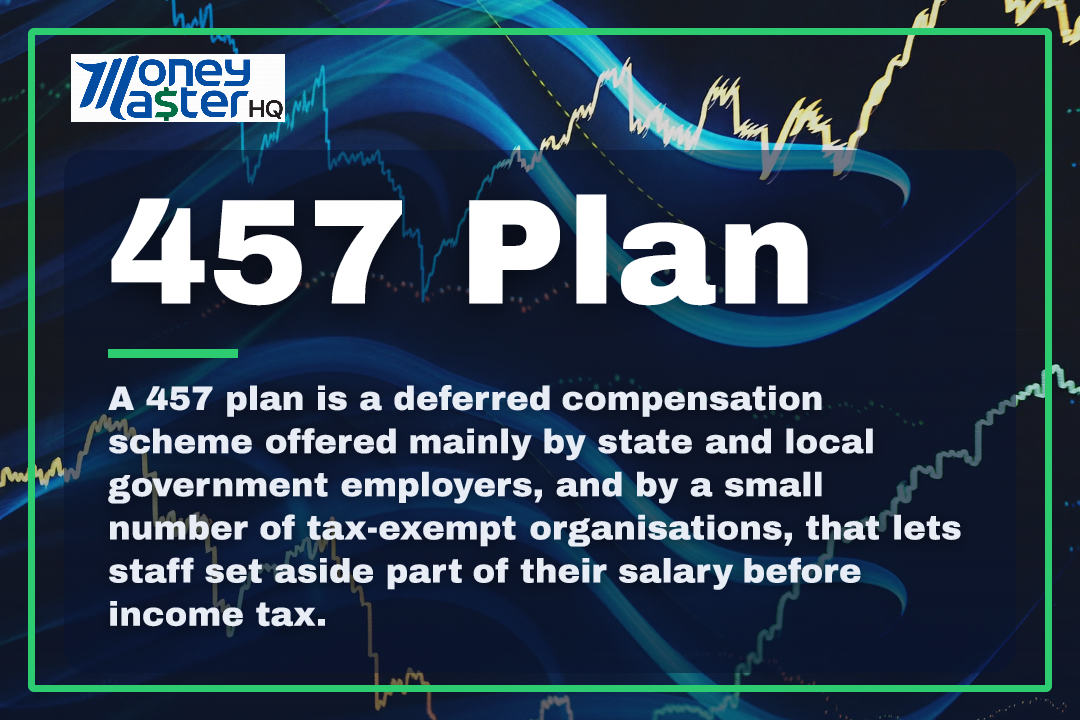
The plan is named after the section of the US tax code that permits it, and it comes in two flavours. Governmental 457(b) plans, used by cities, counties, school districts and state agencies, hold assets in trust for employees, while non-governmental 457(b) plans at charities keep the money on the employer's balance sheet as an unsecured promise to pay.
That distinction matters more than it sounds. In a governmental plan the money is legally the employee's and is protected if the employer runs into trouble, whereas in a non-governmental plan the participant ranks alongside other unsecured creditors if the organisation fails.
For an employer, the plan is a low-cost way to improve a total reward package without raising base salaries and the pension and payroll tax costs that ride on them. Matching contributions are less common than in private sector schemes, so many 457 plans cost the employer little beyond administration.
The headline benefit for employees is flexibility. Money taken out of a governmental 457 after separation from service is taxed as ordinary income but escapes the additional early-withdrawal penalty that applies to most other retirement accounts, so a firefighter retiring at 52 can draw on it immediately.
Two further rules are worth knowing. A 457 limit does not have to be shared with a 401(k) or 403(b), so someone with access to both can defer the full annual amount into each, and a special catch-up in the final three years before normal retirement age can allow contributions of up to twice the standard limit where earlier room went unused.
In practice
Real-world examples.
Example
A county police officer retires at 54 with $340,000 in a governmental 457 plan. She begins drawing $30,000 a year immediately, paying ordinary income tax but no early-withdrawal penalty, and leaves her separate 401(k) untouched until she is older.
Example
A school district's payroll team runs both a 403(b) and a 457 plan. A senior administrator maximises both, deferring $46,000 in total, which reduces his taxable income enough to keep him below the threshold for a phased-out tax credit.
Example
A non-governmental hospital foundation offers a 457(b) to its top twelve executives. During a credit downgrade the finance committee has to explain that those balances sit on the organisation's own books and would be at risk in an insolvency, which prompts three participants to reduce their deferrals.
Think of it
“457 plan is extra retirement savings for government workers-separate from 401(k) limits.
Formula
Calculation
Maximum annual deferral = standard elective deferral limit set by the tax authorities
Special final-three-years catch-up = 2 x standard limit, capped by unused room from earlier years
Cost to take-home pay = deferral - (deferral x marginal tax rate)

Assume the elective deferral limit for the year is $23,000. A city engineer earning $95,000 defers 20% of salary, which is $19,000, comfortably inside that ceiling. At a 24% marginal rate the deferral saves $19,000 x 0.24 = $4,560 of income tax, so her take-home pay falls by $19,000 - $4,560 = $14,440.

Her employer also runs a 403(b), and because the two ceilings are separate she could defer up to $23,000 into each, a combined $46,000 in one year. Alternatively, in the three years before normal retirement age she could use the special catch-up and put up to 2 x $23,000 = $46,000 into the 457 alone, provided she has enough unused room: having under-contributed by about $4,000 a year for ten years, she has roughly $40,000 of room banked, which is more than the extra $23,000 the catch-up requires.
Case study
Seen in the real world.
This is an illustrative and clearly fictional scenario. Fairmont County Transit Authority, an invented public employer with 900 staff, found that experienced mechanics were leaving in their early fifties for private garages, then simply retiring, because their retirement savings were locked away until their sixties.
The authority's fictional benefits manager relaunched its underused 457 plan with a plain-language guide focused on one point: money in this plan can be drawn penalty free as soon as you leave. Participation among staff over 45 rose from 26% to 63% in eighteen months.
The authority did not add an employer match, so the direct cost was limited to about $40,000 a year in administration. The illustrative payoff was that mechanics began staying to build a bridge fund inside the plan rather than leaving early, and the average age at departure rose by nearly three years.
Watch out
Common mistakes.
- Assuming every 457 plan is equally safe, when balances in a non-governmental plan remain the employer's assets and are exposed to its creditors.
- Believing the 457 ceiling must be shared with a 403(b) or 401(k), and therefore contributing far less than the rules allow.
- Trying to use both the special final-three-years catch-up and the standard age-based catch-up in the same year, which the rules do not permit.
Questions
People also ask.
Who can offer a 457 plan?
State and local government employers and certain tax-exempt organisations, though the non-governmental version is usually restricted to a small group of senior staff.
Can a governmental 457 balance be rolled into an individual retirement account?
Yes, but rolling it over generally means giving up the penalty-free early access that made the plan attractive in the first place.
Are employer contributions common in these plans?
Less common than in private sector schemes, and where they exist they count towards the same annual ceiling as the employee's own deferrals.
From the founder's library

Take it further with the book.
Build your financial confidence beyond this definition. Shihan's full-length guide, Accounting Fundamentals, takes the same plain-English approach and turns it into a complete, practical playbook for non-finance managers, business owners and students - with chapter-end quiz answers and presentation slides included.
25% off with code MMHQ25, applied at checkout. Priced in USD - checkout may show the equivalent in your local currency.
View the book and save 25%