
What it means
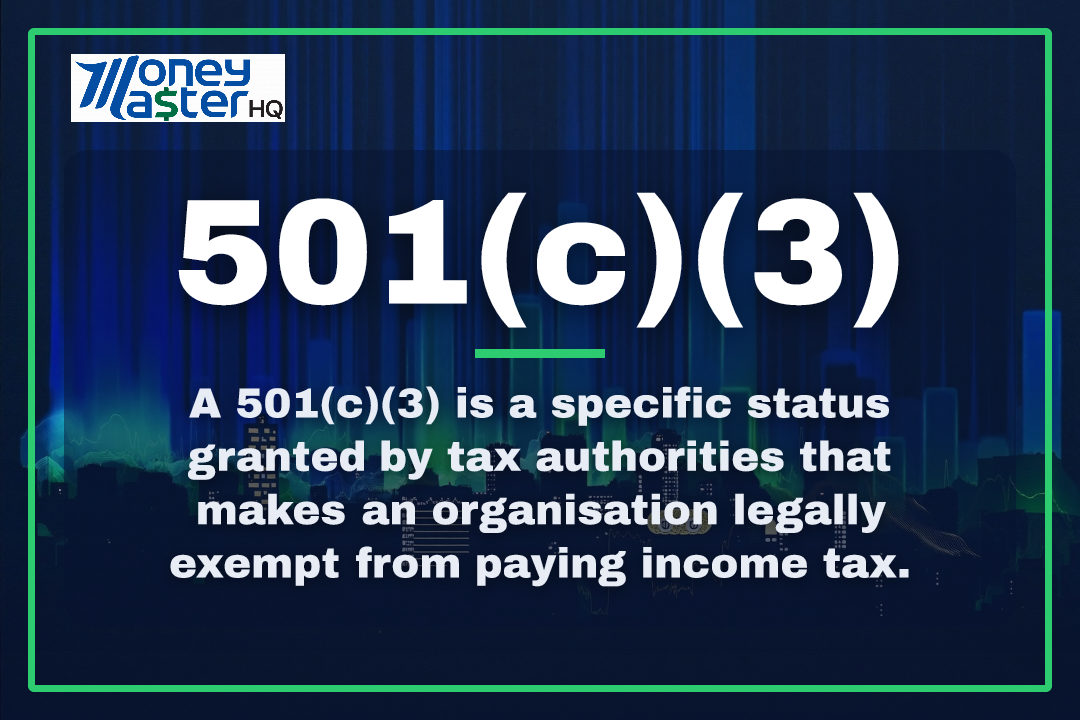
When an organisation registers as a 501(c)(3), it enters a special category in the tax system. The primary benefit of this status is exemption from federal income tax, meaning the group keeps every pound or dollar of profit it generates to put back into its community projects.
Furthermore, anyone who donates money or property to the organisation can usually deduct that amount from their own taxable income. To earn and keep this status, an organisation must clear strict rules set by regulators.
It cannot be organised or operated to benefit private shareholders or individuals, and its earnings cannot line the pockets of any founder or insider. There are also strict limits on how much money the group can spend on lobbying or political campaigns.
In daily practice, running a 501(c)(3) requires careful administration and transparency. Organisations must file annual information returns to show they are still serving the public good.
Grant-making foundations, corporate donors, and individual benefactors almost exclusively give funds to registered groups because they want reassurance that their money is going toward legitimate social causes. For non-finance managers, understanding this term helps when your business collaborates with charities or sponsors community initiatives.
While these entities do not pay income tax, they still need strong financial controls, budgeting, and bookkeeping to satisfy regulators and maintain public trust year after year.
In practice
Real-world examples.
Example
Tech Founder Sarah launches a coding academy for disadvantaged youth as a 501(c)(3). When local software firm Apex donates 10,000 pounds, Apex gets a tax deduction, and Sarah's academy keeps the full amount tax-free.
Example
A local bakery operating as a 501(c)(3) trains and employs formerly incarcerated individuals. Because of its tax-exempt status, a donor gifts 15,000 pounds to buy new ovens, allowing the bakery to expand its social impact without losing funds to tax.
Example
An animal welfare sanctuary registers as a 501(c)(3). When it hosts a yearly gala raising 50,000 pounds in ticket sales and donations, every penny stays within the charity to fund veterinary care, avoiding corporate income tax entirely.
Think of it
“Think of a 501(c)(3) like an ambulance driving through toll roads. Because it is on an emergency mission to help the public, the government waives all tolls and fees so it can reach people faster, provided it never uses that priority pass for a Sunday grocery trip.
Formula
Calculation
Net Community Benefit = Total Revenue (Donations + Grants) - Programme Expenses. Example: A charity takes in 100,000 pounds in donations and spends 85,000 pounds directly on community workshops, leaving 15,000 pounds in reserves, all completely exempt from income tax.Case study
Seen in the real world.
GreenPath Initiative, a fictional environmental education group, originally registered as a standard for-profit company. In its first year, it generated 80,000 pounds in workshop fees and corporate sponsorships, but lost 16,000 pounds of that total to federal and state income taxes, leaving little room to hire extra teachers.
After consulting a tax professional, the founders restructured GreenPath as a 501(c)(3) non-profit organisation dedicated entirely to environmental literacy. They updated their governance documents to state that no private individuals could receive dividends, and they ensured their educational materials were made freely available to the public.
The following year, GreenPath brought in the same 80,000 pounds, but this time, zero pounds went to income tax. They used the saved 16,000 pounds to purchase field trip supplies and hire two part-time instructors. Additionally, because of the new tax-exempt status, a local foundation felt confident enough to award them a 25,000 pound grant, growing their total budget to 105,000 pounds and significantly expanding their reach.
Watch out
Common mistakes.
- Assuming any charity or non-profit automatically has 501(c)(3) status without applying to tax authorities.
- Believing that founders or board members can take a percentage of the organisation's profits as a bonus.
- Thinking that tax exemption means the organisation does not need to file annual financial returns.
Questions
People also ask.
Can a 501(c)(3) make a profit?
Yes. Non-profits can and should generate surplus revenue to stay financially stable, but that money must be reinvested into the mission rather than distributed to owners.
Are all non-profit organisations automatically 501(c)(3) groups?
No. While all 501(c)(3) entities are non-profits, not all non-profits meet the specific criteria for this tax-exempt status, such as social clubs or trade associations.
Can a 501(c)(3) endorse political candidates?
No. Federal rules strictly forbid these organisations from endorsing political candidates or participating in political campaign activities.
From the founder's library

Take it further with the book.
Build your financial confidence beyond this definition. Shihan's full-length guide, Accounting Fundamentals, takes the same plain-English approach and turns it into a complete, practical playbook for non-finance managers, business owners and students - with chapter-end quiz answers and presentation slides included.
25% off with code MMHQ25, applied at checkout. Priced in USD - checkout may show the equivalent in your local currency.
View the book and save 25%Related